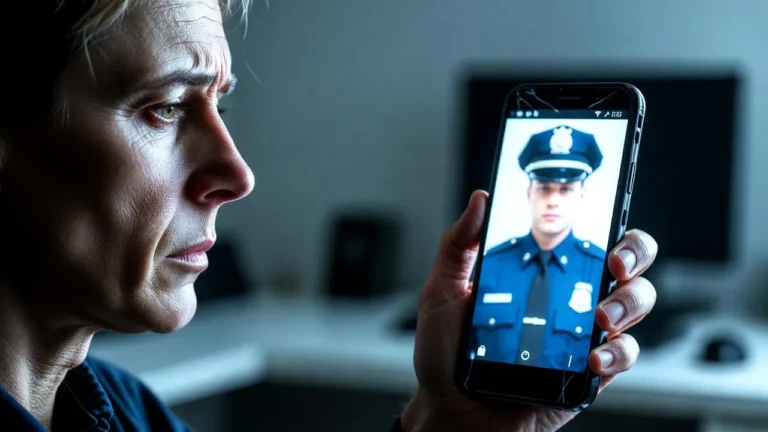
The “Grandchild Voice” Scam: What Every Grandparent Needs to Know
Table of Contents
TL;DR – What You Need to Know Right Now
- The Scam: Criminals use AI to clone your grandchild’s voice from social media videos, then call pretending there’s an emergency requiring immediate money
- The Scale: Seniors lost $4.8 billion to scams in 2024; AI voice scams alone caused $527 million in losses in early 2025
- How It Works: They need just 3-30 seconds of audio from Facebook, TikTok, or Instagram to create a perfect voice copy
- Red Flags: Late night calls, demands for gift cards/wire transfers, pressure to act immediately, instructions to “keep it secret”
- Best Protection: Create a family code word only you and your relatives know; always hang up and call back to verify
- Golden Rule: No real police, court, or lawyer will EVER ask for payment via phone using gift cards or wire transfers
- If You Get a Call: Hang up immediately, call your grandchild directly at a saved number, call their parents, wait 15 minutes to verify
- Bottom Line: Real emergencies can wait 15 minutes for verification. Fake emergencies can’t.
Let me tell you about something that’s been keeping me up at night, and it should concern you too. There’s a scam going around that’s so convincing, even the sharpest grandparents are falling for it. It’s called the “Grandchild Voice” scam, and criminals are using new technology to make it sound exactly like your grandchild is calling you in an emergency.
I know what you’re thinking—”I’d recognize my own grandchild’s voice.” That’s what everyone thinks. But here’s the scary part: with today’s artificial intelligence, scammers can copy anyone’s voice using just a few seconds of audio from a Facebook video or TikTok post. And they’re using it to steal billions of dollars from people just like you.
Let me walk you through everything you need to know to protect yourself and your family.

What Is the Grandchild Voice Scam?
Picture this: Your phone rings late at night. You answer, half-asleep. The voice on the other end sounds panicked—and it sounds exactly like your grandson.
“Grandma, it’s me! I’m in trouble. I was in a car accident, and I’m at the police station. Please don’t tell Mom and Dad—they’ll be so upset. I need $9,000 for bail right now, or I’ll have to stay in jail.”
Your heart races. Of course you want to help. Then another voice comes on the line—someone claiming to be a police officer or lawyer, giving you urgent instructions on how to send the money.
This is the scam. And it’s not really your grandchild calling.

The Numbers Are Staggering
According to law enforcement, seniors lost $4.8 billion to scams in 2024 alone, with the average victim losing $83,000. Between January and July 2025, AI voice cloning scams specifically caused $527 million in losses—a 200% increase from the year before.
Think about that for a moment. We’re not talking about a few hundred dollars here and there. These scams are causing catastrophic financial harm, with some victims losing their entire life savings.

How Do Criminals Pull This Off?
You might be wondering: “How can they possibly copy my grandchild’s voice?” It’s actually frighteningly simple, and that’s what makes it so dangerous.
Step 1: They Find Voice Samples Online
Criminals search social media—Facebook, Instagram, TikTok, YouTube—looking for videos where your grandchildren are talking. Maybe it’s a birthday message, a silly dance video, or a clip from a school play. They only need 3 to 30 seconds of audio.
One grandmother told me her grandson had posted a funny video of himself singing in the car. That 15-second clip was enough.
Step 2: They Use AI to Clone the Voice
There are now websites and apps that can take that short audio clip and teach a computer to speak in that exact voice. Some of these tools cost as little as $5 per month. The technology that once required a Hollywood studio is now available to anyone with a laptop.
Research shows that just three seconds of audio can create a voice that’s 85% accurate. With a bit more audio, it can reach 95% accuracy. That means even you—someone who’s known your grandchild their entire life—might not be able to tell the difference.
Step 3: They Create a Crisis Story
The scammers already know a lot about your family from social media. They know your grandchild just bought a car, or went on spring break, or started college. They weave these real details into a fake emergency to make it believable.
Common scenarios include:
- “I was in a car accident and hit someone. I’m at the police station.”
- “I got arrested on vacation in Mexico and need bail money.”
- “I’m being held by kidnappers and they’ll hurt me if you don’t pay.”
- “I crashed my friend’s car and the police found drugs inside.”
Step 4: They Add Fake Authority Figures
Often, a second person comes on the line claiming to be a police officer, lawyer, or bail bondsman. This adds credibility and makes you less likely to question what’s happening.
Step 5: They Demand Immediate, Untraceable Payment
Here’s where the red flags really show up. They’ll tell you to:
- Buy gift cards (iTunes, Google Play, Amazon) and read the numbers over the phone
- Wire money through Western Union or MoneyGram
- Send cryptocurrency
- Give cash to a “courier” who comes to your home
- Use payment apps like Venmo or Cash App
They’ll always emphasize three things:
- It’s urgent — “We need this in the next hour or he goes to jail.”
- Keep it secret — “Don’t tell anyone. There’s a gag order.” or “Your grandson doesn’t want his parents to know.”
- Don’t hang up — They want to keep you on the line so you can’t verify the story.
Real Stories from Real Victims
Let me share some actual cases, because sometimes hearing what happened to others helps us recognize the danger.
Marilyn from Ontario
Marilyn received a call from someone claiming to be her grandson Ian, saying he’d been arrested for stealing a car and needed $9,000 immediately. Even though the voice sounded “slightly different,” the emotional urgency convinced her it was real. She was literally at the bank, about to withdraw the money, when an alert customer service agent stopped her and asked some questions. That agent saved her $9,000.
Jane from Regina (Age 75)
Jane got a call from what she believed was her grandson’s voice, claiming he’d been arrested. She went to her bank and told the teller she was buying her grandson a car for graduation—a cover story the scammer told her to use. Thankfully, she called her grandson directly after hanging up and discovered the truth before the money was gone.
Jennifer DeStefano from Arizona
This one still gives me chills. Jennifer answered her phone and heard her 15-year-old daughter screaming and crying, saying she’d been kidnapped. The scammer demanded $1 million. Even though Jennifer eventually realized it was fake, imagine the terror of those moments.
Shirley (Age 91)
Shirley received a call from someone she believed was her grandson Joseph, saying he’d hit a pregnant woman with his car and was in jail. A “lawyer” demanded $9,000 in bail money. She rushed to her bank and was about to hand over the cash when someone intervened.
These aren’t isolated incidents. A massive criminal ring operating out of Montreal, Canada was just indicted for running this scam across 40 U.S. states for three years straight. They stole over $21 million from victims before finally being caught.
Warning Signs: How to Spot the Scam
Here are the red flags you should never ignore:
During the Call:
- The caller doesn’t identify themselves right away and says “It’s me—do you know who this is?” (They’re trying to trick you into saying the name)
- The call comes very late at night or very early in the morning
- The voice sounds almost right but something feels slightly off
- A second person claiming to be a lawyer or police officer gets on the line
- They tell you to keep it secret and not tell anyone in the family
- They pressure you to act immediately—”We need this in the next hour!”
- They mention specific details about recent family events (trip, graduation, new car)
About the Payment:
- They want gift cards, wire transfers, cryptocurrency, or cash
- They send someone to your house to pick up cash
- They say things like “gag order” or “legal restrictions” prevent you from talking to family
- No legitimate court, police department, or government agency will EVER ask for payment via phone using gift cards or wire transfers. Ever. Period.

How to Protect Yourself: Simple Steps That Work
Don’t worry—you don’t need to become a technology expert or stop using Facebook. You just need to follow some simple rules.
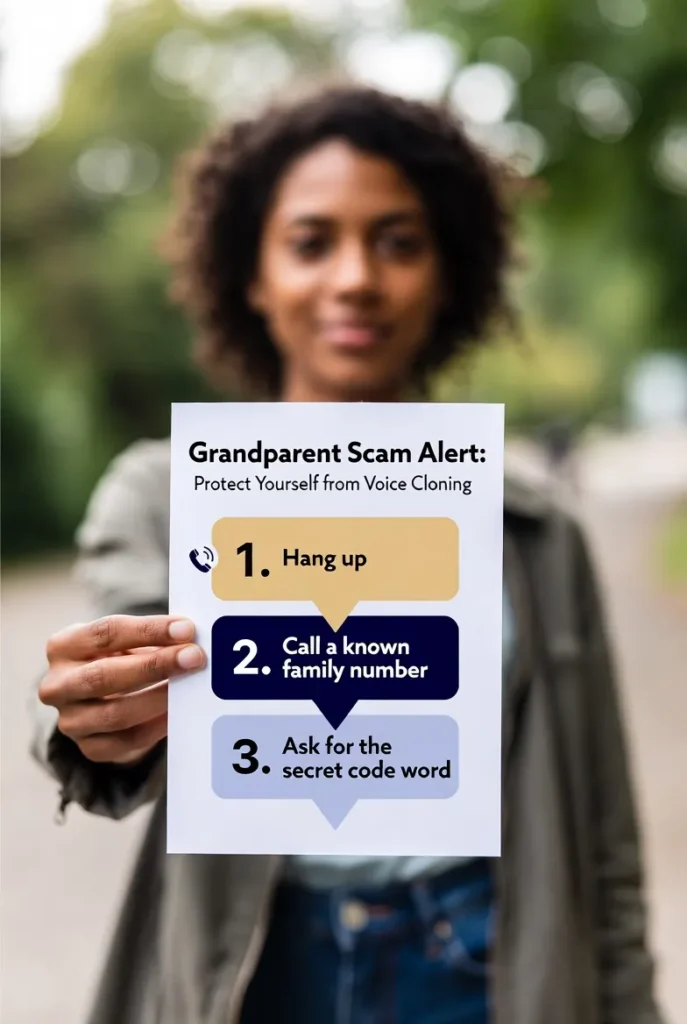
Protection Strategy #1: Create a Family Code Word
This is the single most effective protection. Sit down with your children and grandchildren and pick a secret word or phrase that only your family knows. It could be something random like “Pineapple Sunset” or “Blue Elephant.”
Tell everyone: “If you ever call me with an emergency and need money, I’m going to ask for the code word. If you can’t give it to me, I’ll know it’s not really you.”
Make sure your grandchildren understand this isn’t silly—it’s serious. Practice it every few months so everyone remembers.
You can also use a security question instead, like “What was the name of our first dog?” or “What color was the car I taught you to drive in?”
Protection Strategy #2: Always Hang Up and Call Back
If you get a call like this, here’s what you do:
- Hang up immediately. Don’t stay on the line. Don’t worry about being rude.
- Call your grandchild directly at the phone number you have saved in your phone or written in your address book. Don’t use any number they give you during the call.
- Call your adult child (the grandchild’s parent) to verify the story.
- Wait. Real emergencies can wait 15 minutes while you verify. Fake emergencies can’t.
This simple step—hanging up and calling back—would stop virtually 100% of these scams. The criminals know this, which is why they pressure you to stay on the line.
Protection Strategy #3: Tighten Your Social Media Privacy
Criminals get voice samples from social media. Here’s how to make it harder:
On Facebook:
- Go to Settings & Privacy → Settings → Privacy
- Change “Who can see your posts?” to “Friends” instead of “Public”
- Review old posts and videos—delete or hide ones with voice recordings
- Check who can see your friends list and family connections
On Instagram/TikTok:
- Switch your account to “Private” if possible
- Limit who can see your videos and posts
- Be careful about posting videos where family members are talking
General Rules:
- Think twice before posting videos with your grandchildren’s voices
- Don’t share information about recent trips, new cars, or graduations publicly
- Avoid posting things like “Just dropped Emily off at her first day of college at Ohio State!” This tells criminals: Emily is your grandchild, she’s 18, she’s far from home, and she’s at Ohio State.
Protection Strategy #4: Never Send Money Without Verifying
Make this your absolute rule: You will never, ever send money based on a phone call alone. No exceptions.
Even if the voice sounds perfect. Even if they’re crying. Even if they say it’s life or death. You will hang up and verify first.
Real family emergencies can wait 20 minutes. Scam emergencies can’t.
Protection Strategy #5: Ignore Caller ID
Scammers can make their phone number appear as anyone they want on your caller ID. So if it says “Jessica Cell Phone” or shows a local police department number, that means nothing. They can fake it.
Protection Strategy #6: Ask Questions Only the Real Person Would Know
If you’re on the phone and something feels off, ask questions:
- “What was the name of your first pet?”
- “What did we do on your 10th birthday?”
- “What’s your middle name?”
- “What nickname did I always call you growing up?”
The scammer won’t know these answers. Your real grandchild will.
Protection Strategy #7: Talk to Your Family
Have a conversation with your adult children and grandchildren about this scam. Show them this article. It’s not embarrassing to talk about—it’s smart.
Tell them: “I’ve learned about these voice cloning scams, and I want us to have a family code word as protection.”
Ask them to review their social media privacy settings and limit public voice content.
What If You’ve Already Fallen for It?
First, don’t be ashamed. These scams are designed by professionals to fool you. Smart, educated people fall for them every day.
If you’ve sent money:
- Contact your bank or credit card company immediately. If you used a credit card or bank transfer, you might be able to stop or reverse it.
- If you bought gift cards, contact the gift card company right away with the receipt and card numbers. Sometimes they can freeze the cards.
- Report it to law enforcement:
- Local police department
- FBI Internet Crime Complaint Center (IC3.gov)
- Federal Trade Commission (ReportFraud.ftc.gov)
- Tell your family what happened. Yes, it’s embarrassing. But they need to know, both to support you and to protect other family members.
- Watch your accounts for additional fraud. Scammers sometimes try to target victims again.
- Don’t blame yourself. These criminals are professionals. The technology is sophisticated. You were trying to help someone you love.
Teaching Moments for the Whole Family
If you have grandchildren, this is actually a great opportunity to have an important conversation with them:
Talk to them about:
- What they post online and who can see it
- Privacy settings on their social media
- The importance of the family code word
- What to do if someone pretends to be them
For teenagers and young adults, explain that their social media posts might be used against their grandparents. That funny TikTok video could be turned into a weapon by criminals. It’s not about censoring themselves—it’s about being smart about privacy settings.
The Bigger Picture: Why This Is Happening Now
You might wonder why this is suddenly such a big problem. A few reasons:
Technology got cheap and easy. Voice cloning tools that used to cost thousands of dollars and require expert knowledge now cost $5-$29 per month and anyone can use them.
Social media gave criminals access to our voices. Twenty years ago, criminals couldn’t hear what your grandchildren sounded like. Now, there are thousands of videos online with voice samples.
International crime rings. These aren’t individual scammers—they’re organized operations running call centers in other countries. The Vermont ring had 25 people working together for three years.
It works. Research shows that 77% of people who receive an AI voice cloning message and engage with it actually lose money. When something works that well, criminals keep doing it.
What Law Enforcement Is Doing
The good news is that authorities are taking this seriously. In 2025, they indicted 25 people involved in a massive grandparent scam operation. These criminals face up to 40 years in federal prison.
Law enforcement is working internationally to track down these criminals, even when they operate from other countries. They’re using DNA evidence, financial tracking, and cooperation with banks to identify and prosecute scammers.
But here’s the reality: they can’t stop every scam before it happens. There are too many criminals and not enough resources. That’s why your personal vigilance is so important.
Quick Reference: What to Remember
Let me summarize the most important points:
The Three Golden Rules:
- Hang up and call back using a number you already have
- Never send money based on a phone call alone, no matter how urgent
- Use a family code word that only your family knows
Red Flags:
- Late night or early morning calls
- “Don’t tell anyone” instructions
- Requests for gift cards, wire transfers, or cryptocurrency
- Pressure to act immediately
- Claims of gag orders or legal restrictions
Remember:
- No real police department or court asks for payment via phone
- Real emergencies can wait 15 minutes for verification
- Caller ID can be faked
- A voice that sounds real might not be real anymore
Why I’m Telling You This
I know this all sounds frightening. And maybe you’re thinking, “This could never happen to me. I’m too smart for that.”
But here’s the thing: these scams are specifically designed to bypass your intelligence. They target your emotions—your love for your grandchildren, your instinct to protect them, your desire to help in a crisis.
The smartest, most careful people fall for these scams every day because they exploit something beautiful about being human: we love our families and we want to help them.
That’s not a weakness. That’s what makes you a wonderful grandparent.
The goal here isn’t to make you paranoid or afraid to answer your phone. The goal is to give you simple tools—a code word, a verification process, some awareness of the tricks—so you can protect yourself while still being the loving, helpful grandparent you’ve always been.
A Final Word of Encouragement
I want you to feel empowered, not scared. You now know more about this scam than 90% of people. You know what to look for. You know what to do.
Take 20 minutes this week to:
- Choose a family code word and share it with your children and grandchildren
- Review your Facebook privacy settings
- Write down the phone numbers you’ll use to verify emergency calls
- Have a conversation with your family about this scam
Those 20 minutes could save you $10,000, $50,000, or more.
And remember: if you ever get a call like this and feel that surge of panic, take a breath. Tell yourself: “This is exactly what they want me to feel. I’m going to hang up and verify.”
You’ve got this.
Frequently Asked Questions
Q: How can I tell if a voice is AI-generated or real?
Honestly, it’s becoming almost impossible to tell with certainty. Modern AI can create voices that are 95% accurate to the original. However, you might notice very subtle things like:
Slightly odd pronunciations of certain words
Unusual pauses or breathing patterns
A slight “flatness” to emotional tones
Background noise that seems off
But don’t rely on detecting these clues. Instead, use the verification process: hang up and call back. Even if the voice sounds 100% real, always verify through an independent phone call to a number you already have.
Q: What if my grandchild actually is in trouble and needs urgent help?
This is the fear that makes these scams work so well. Here’s the truth: if there’s a real legal emergency, it can wait 15-20 minutes while you verify. Real police stations, hospitals, and lawyers understand that you need time to arrange money. They won’t demand immediate payment over the phone.
Real emergencies also work through proper channels—you’d receive calls from official numbers you can verify, you’d be able to visit in person, and you’d receive official documentation. No legitimate authority will threaten your grandchild if you take time to verify.
If it’s truly an emergency (like a medical situation), call your grandchild’s parents immediately. They would already know about it.
Q: My grandchildren don’t use social media much. Am I still at risk?
Unfortunately, yes. Scammers might find voice samples from:
Old voicemail greetings
Videos friends or other family members posted
School websites with sports team videos
Local news clips
Anywhere audio has been recorded and shared
Additionally, even without a perfect voice clone, these scams sometimes work with simple impersonation. The criminal calls late at night when you’re drowsy and says “Hi Grandma, it’s me—do you know who this is?” When you guess “Jake?” they respond “Yes! It’s Jake!” and proceed with the scam.
That’s why the family code word is so powerful—it works even when they don’t have a voice clone.
Q: I already fell for one of these scams and lost money. Should I be worried about being targeted again?
Unfortunately, yes—scammers sometimes keep lists of successful targets. Once they know someone has fallen for a scam, they may try again with a different approach. Some criminals even sell these lists to other scammers.
Here’s what you should do:
Report what happened to police and the FBI (IC3.gov)
Tell your family what happened so they can watch for signs of future attempts
Consider changing your phone number if you continue to receive suspicious calls
Be extra vigilant for the next 6-12 months
Consider signing up for fraud alerts with your bank and credit monitoring services
Most importantly, set up that family code word now. It will protect you from any future attempts. And please don’t feel ashamed—use this as motivation to help protect others by sharing what you learned.
Important Resources & Sources
This article was researched using information from trusted law enforcement and security sources:
- Fairfax County Government: Artificial Intelligence Taking the Grandparent Scam to the Next Level
- CBC News Canada: Fraudsters Likely Using AI to Scam Seniors
- Community Savings Bank: Grandparent Scams Get More Convincing
- Tsuut’ina Nation Police Service: Sophisticated Grandparent Scams
- Wipro Innovation: Deepfake Cloned Voice Scams
Report scams to:
- FBI Internet Crime Complaint Center: IC3.gov
- Federal Trade Commission: ReportFraud.ftc.gov
- Your local police department
Stay safe, stay informed, and remember: a few minutes of verification can save a lifetime of savings.